Thursday, April 29, 2010
Wednesday, April 28, 2010
What Happened to the Public Restroom?

Madison Square Park's automatic public toilet (via).
When you gotta go, you gotta go. Unfortunately, in a city of 8.3 million people, finding a suitable place to relieve yourself can be difficult—especially in public parks and subway stations, where there isn’t a Starbucks nearby. Public restrooms are in demand, and the city seems to be doing little about it.
In 2005, the city signed a street furniture deal with Spanish advertising company Cemusa. The 20-year-contract calls for Cemusa to install a mere 20 APTs, or automatic public toilets. They will also install 37 bike parking structures, 330 newsstands, 200 bus shelters and replace all current ones (totaling 3,300 bus shelters).
Since 2005, only two APTs have been built—one on Madison Avenue and 23rd Street and one at National Street and Corona Plaza in Queens.
The APT is a uniquely weird structure. The restroom, which is extremely wide (6’7” x 12’), resembles Cemusa’s newsstands and bus stops, with glass and silver finishes and even prominent ad space. Check the green “vacant” light is lit; insert 25 cents (coins only, no bills) and the doors open like an elevator.
Then it gets a little awkward. The doors remain open for an additional twenty to thirty seconds to accommodate wheelchairs, leaving the customer impatiently waiting and avoiding the gaze of any passerbys who can see in.
Once the door closes, the APT is ready for use. The structure is soundproofed to keep all street noise out, but it’s easy to feel exposed. The toilet, which is stainless steel and has no lid (there are tissue seat covers available), openly sits in the corner.
The toilet is surrounded by a series of buttons: red for emergency, yellow for assistance, blue to flush, and black for toilet paper. Each user is only allowed three helpings of sixteen-inch strips of toilet paper. After twelve minutes, a yellow warning light turns on. The green button opens the door if the user is ready before their fifteen minutes are up.
What happens after a person exits the APT is what makes it truly unique. The doors shut and the “occupied” light stays lit. Inside, two robotic arms spray the toilet, sink and floor with disinfectant. Dryers then dry the space. After 90 seconds and 14 gallons of water, it’s ready for use again.

The inside of Madison Square Park's APT (via).
The main reason for the lack of APTs is the strict site requirements. Possible locations must be sidewalks or plazas controlled by government agency or public authority, traffic islands under the DOT’s jurisdiction, on parks property, or on wide streets in commercial districts. Access to phone and plumbing lines are also necessary.
Engineering issues halted construction on three additional APTs at the 69th Street Pier and on Marcus Garvey Boulevard in Brooklyn and the Lippman Arcade in Flushing, Queens, according to the New York Times in August 2009. Since then, none of the three have completed installation.
Many community boards also reject the APTs due to their high costs. The toilet and its installation cost anywhere from $300,000 to $500,000. Others, like Community Board 2, feel the futuristic design does not fit into the neighborhood aesthetically.
Laureen, who lives on 23rd Street, agrees with Community Board 2. "I think it's really cool," she said of Madison Square Park's APT, "but it looks a little funny next to the park."
In 2001, the 34th Street Partnership gave similar self-cleaning automated public restrooms a try. The number of visits to the two restrooms, located at Herald Square and Greeley Square, dropped from 28,000 to less than 14,000 in 2007, according to the New York Times in December 2009. They were replaced with regular restrooms that are manually cleaned in 2008.
Automatic or not, there are just as few restrooms underground. Of the city’s 468 subway stations, according to am New York, there are only 129 restrooms in 77 stations. About 60 of them are locked or used as storage. "They may be locked at any given time due to vandalism and ongoing repairs," said NYC Transit spokesperson Charles Seaton to am New York on April 11. Unlocked restrooms are closed between midnight and 5 a.m. for cleaning.
There doesn't seem to be much cleaning going on in the rare underground restrooms. Those deemed safe enough for use were filled with garbage and standing water and smelled of various odors, according to am New York. The men's restroom in the Hunts Point Avenue station didn't even have walls on the stalls.
"I wouldn't be surprised if they [the bathrooms] were disgusting," said Rebecca, who was riding the E train on a Saturday afternoon. "I wouldn't even know where to look for one."
Bayonne Bridge Needs To Grow Up

As the face of commerce begins to transform, the Bayonne Bridge will need help catching up, reports NJ.com. The bridge, which at the time of its opening in 1931 was considered the largest steel arch span in the world, may be too short to let future cargo ships pass in and out of Newark Bay. A study completed in 2010 by the Port Authorities of New York and New Jersey confirmed that, should immediate action not be taken, the area could lose both jobs and business.
Back in 2006, a $5.25 billion dollar plan was approved by the people of Panama to revitalize the Panama Canal. By 2014, the canal will be double the size it is now, allowing for larger trade ships to pass through with less congestion and time in transit. Cargo ships will also become commonplace due to the change.
The bridge, which connects Staten Island to New Jersey, and crosses the Kil Van Kull, is the sole waterway entrance into Newark Bay. Nearly 270,000 exist around the shipping industry alone. It's height ranges between 115 to 151 feet depending on the tide. The yearly 5,000 ships that pass through just barely pass underneath the bridge. With a future trend in larger commercial ships, Newark Bay could be cut off entirely as these ships begin to take their business elsewhere, leading to a loss of billions in cargo and around 31,000 jobs.
"Our port is one of the most active in the country and is critical to the future of good quality jobs in my district," said Michael E. McMahon, a representative for the House Transportation and Infastructure committee, during a press release. "If we do not immediately start addressing the Bayonne Bridge height limitation, our local economy will undoubtedly suffer.”
Raising the bridge will cost $1.3 billion dollars, and is estimated to not be completed until at least 2019. Some groups, such as U.S. Army Corps of Engineers, suggested a tunnel, but that would not be completed until 2022.
Should the many ports along Newark Bay lose business with these commercial ships, they will still end up in New Jersey via train to Pennsylvania, followed by truck.
In recent speeches, Governor Christie gave his support to fixing the Bayonne Bridge, saying it was vital for the state's economy. The Port Authority, in many statements, has committed itself to finding a solution, but has yet to announce any official plans.
Image Credit.
Internship Woes?
With the semester coming to an end and summer vacation right around the corner; students will have to decide whether to work 9 to 5 over the next 3 months as an investment in their futures or simply laze around their apartments watching morning cartoons.
Internships are as much apart of college life as oversleeping, and under-aged drinking. If you happen to have $20,000 laying around you can spend your summer as Donatella Versace's intern she'll even throw in a autographed T-shirt, signed bottle of perfume, and a single meet and greet with Donatella herself.
At the New School internships are of course a huge issue with many students complaining about internships from hell where they are tasked to fetching coffee and mailing packages. According to Jeff Feld Administrative Coordinator for Eugene Lang Advising, many students have come in with complaints, but their has been success with particular companies like Gawker Media. Students who currently don't have an internship can also go to the Academic section of the Eugene Lang homepage to take a gander at their list of approved internships.
Gawker media is one of the leading media & news companies specializing in blogs. They own several popular blogs that a leading authorities in the their field like video game blog Kotaku, technology blog Gizmodo and auto blog Jalopnik. The application process is strenuous and competitive with college attendance, and credit acquisition being a requirement for all interns. "Thats one students seem to enjoy, I hear good things about it" said Feld.
I have personally gone through this process, and been chosen to intern for Kotaku under Deputy Editor Stephen Tolito, at the Gawker Media New York office in Soho. The whole process elapsed over the course of 3 months starting in February. I sent the Kotaku office a copy of my resume, cover letter, and three clips which represented the range of journalistic writing I've done over the course of my collegiate career. This was followed by a phone interview in late February with an on the spot quiz about Kotaku writers and history and a impromptu pitch meeting. Upon completion I was assigned by Tolito to come up with three pitches by Wednesday that week with one being a weekly feature.
In April received the coveted call of affirmation having lost hope and interest with plans to live in London for the summer. Tolito had hired me for an unpaid internship to start in May.
Internships while good at heart sometimes turn into a sad repeat of the first half of Devil Wears Prada. They have received a particularly bad rap with law makers in recent weeks detailed in one New York Times article here.
Internships are as much apart of college life as oversleeping, and under-aged drinking. If you happen to have $20,000 laying around you can spend your summer as Donatella Versace's intern she'll even throw in a autographed T-shirt, signed bottle of perfume, and a single meet and greet with Donatella herself.
At the New School internships are of course a huge issue with many students complaining about internships from hell where they are tasked to fetching coffee and mailing packages. According to Jeff Feld Administrative Coordinator for Eugene Lang Advising, many students have come in with complaints, but their has been success with particular companies like Gawker Media. Students who currently don't have an internship can also go to the Academic section of the Eugene Lang homepage to take a gander at their list of approved internships.
Gawker media is one of the leading media & news companies specializing in blogs. They own several popular blogs that a leading authorities in the their field like video game blog Kotaku, technology blog Gizmodo and auto blog Jalopnik. The application process is strenuous and competitive with college attendance, and credit acquisition being a requirement for all interns. "Thats one students seem to enjoy, I hear good things about it" said Feld.
I have personally gone through this process, and been chosen to intern for Kotaku under Deputy Editor Stephen Tolito, at the Gawker Media New York office in Soho. The whole process elapsed over the course of 3 months starting in February. I sent the Kotaku office a copy of my resume, cover letter, and three clips which represented the range of journalistic writing I've done over the course of my collegiate career. This was followed by a phone interview in late February with an on the spot quiz about Kotaku writers and history and a impromptu pitch meeting. Upon completion I was assigned by Tolito to come up with three pitches by Wednesday that week with one being a weekly feature.
In April received the coveted call of affirmation having lost hope and interest with plans to live in London for the summer. Tolito had hired me for an unpaid internship to start in May.
Internships while good at heart sometimes turn into a sad repeat of the first half of Devil Wears Prada. They have received a particularly bad rap with law makers in recent weeks detailed in one New York Times article here.

soft infastructure
from the Regional Plan Association newsletter:
From Bricks to Bytes, Cities and Innovation
By Thomas K. Wright, Executive Director, RPA
Regional Plan Association has always tried to focus on what’s most important to making our region more prosperous, efficient, and fair. In the last century, there’s no question that was physical infrastructure projects. Our three landmark regional plans, 1929, 1969, and 1996, focused on hard infrastructure such as transit lines, electricity, water supply, parks, and — especially early in the century — on accommodating automobiles. Our 1929 document, for example, proposed 2,500 miles of limited access highways and included a plan for Radburn, N.J., entitled “New Town for the Motor Age.” Later we took a different tack, urging as early as 1969 to reserve several Manhattan streets for pedestrians and transit, and in 1996, a four-borough Second Avenue Subway.
But in our current century, there is the potential for silicon chips, the Internet, and new wireless technologies to make potentially much smaller interventions in the physical environment very important. Mario Gandelsonas, Director of Princeton University’s Center for Architecture, Urbanism and Infrastructure, calls these systems “soft infrastructure.” And as we start to think about what kind of recommendations may be included in RPA’s Fourth Regional Plan, we are going to be paying close attention to these opportunities. Call it “The Smart Region Plan.”
The importance of such subjects is why we focused on them at our 20th Annual Regional Assembly earlier this month at the Waldorf-Astoria, where over 800 regional business and civic leaders discussed Innovation and the American Metropolis. During panels and keynote speeches, we didn’t ignore our traditional interests such as transportation and parks, but we did spend more time talking and thinking about how relatively cheap and innovative technologies could make them function much better.
For example, Boston’s transit agency began making real-time data feeds available for five bus lines last November. Within an hour, a programmer had created an application on Google that showed the real-time location of buses on those lines. In two days there was a new web page which tracked the movement of the buses. In a week, a desktop application provided countdown information for a rider’s specific stop. In a month, the Centre Street Station in Jamaica Plain had an LED sign that counted down to the next bus arrival. In five weeks, all this data was integrated on apps for the iPhone and Android. In seven weeks the data could be delivered to any phone. Finally, two months after the data was made available, a texting service would send real-time data to any mobile phone on the arrival of the next bus at any station. All this with the construction of hardly any new physical infrastructure at all, such as big electronic signs announcing bus arrivals. While these would be nice, why not harness the wider public in much quicker and cheaper ways?
Another example: we provided an audience for Zipcar — not because it’s an easy way to rent a car off the street, but because we know that the capital cost of providing structured parking is killing great mixed-use, transit-accessible development projects that would satisfy market demand and add to property tax rolls from Newark to Bridgeport. ZipCar says that every parking space for one of its cars eliminates the need for about 14 conventional parking spaces. That means developers could reduce the capital costs of parking by 93 percent - a boon for TOD.
Congestion pricing is also a transformative system that relies on new technology more than hard infrastructure to reshape cities in good ways. London, Stockholm, and Singapore have demonstrated this, and someday hopefully New York City will too. But beyond using the laws of supply and demand to manage city streets, new technology provides us with many options for addressing traffic congestion.
The taxi fleets of Stockholm, New York, and other cities are now equipped with GPS monitors. In addition to exposing systematic overcharging by a few rotten cabbies, these mobile monitors provide instant feedback on traffic flows and capacity. Programmers at IBM are going beyond real-time analysis to create models that will predict traffic congestion before it happens. Soon stoplights will be connected to central databases that can calibrate the signals to ease traffic before it builds up.
The smart grid is another potentially transformative innovation, creating a two-way electrical supply system that monitors the flows and demands on energy to prioritize uses and needs and to reduce overall power demand (and, by extension, carbon emissions). And electric vehicles are essentially batteries on wheels, charging up during the night, when demand is lowest, and providing mobile sources of supply that can be drawn down during peak periods. Suddenly, metropolitan areas become the country’s most efficient and interconnected energy users, gaining incredible competitive advantages. Power supply company NRG is in the process of making Houston the nation’s first city to have full electric vehicle recharging capability. Yes, Houston!
And we’ve only begun to scratch the surface of the capabilities of GIS. As data sets become more robust, they will also become smarter — learning to connect with other systems and evolve.
Who knows precisely where these new technologies and capabilities will lead us? But that’s where planning comes in — to try to sort through the priorities and possibilities, and then identify where these exciting new developments can and should take our cities and regions in the future. There will always be new capital projects we need to focus on — high-speed rail for the Northeast Corridor, for example, or seamless transit connections to New York’s airports. But here’s a bet that the next comprehensive regional plans — for New York and every other major metro — will be focusing much less on new highways and subways, and much more on innovation, technology, apps and creativity. It’s going to be a wild ride!
Tuesday, April 27, 2010
thursday's interpreters
power broker, 26--allyson
power broker, 28--ashley c.
power broker, 29-30--liam
wrestling, 4--ashley h.
death and life, 6--jessica
also, everyone needs to read chapters 29 and 30, and single out a representative passage
Dinner and a Movie

It looked abandoned from the outside. The marquee was wordless, ripped apart, with the exception of one word above where the titles would be—Cinema, with a king’s crown dotting the I. Neither of us had ever been to Gravesend, Brooklyn before and deemed it ostensibly nice, reminiscent of Astoria, Queens. But the anomaly under investigation, New York's last porn theatre, did not fit in with its surroundings. The ticket office below the shattered marquee was shut off by tightly closed window blinds. A small, barely noticeable sign read, TICKET ADMISSION INSIDE. I told Laura, “I have that feeling you get just before the big drop on the roller coaster.”
A New Life for the Dead
 Image "The End of the Tapeloop Project" By Vige
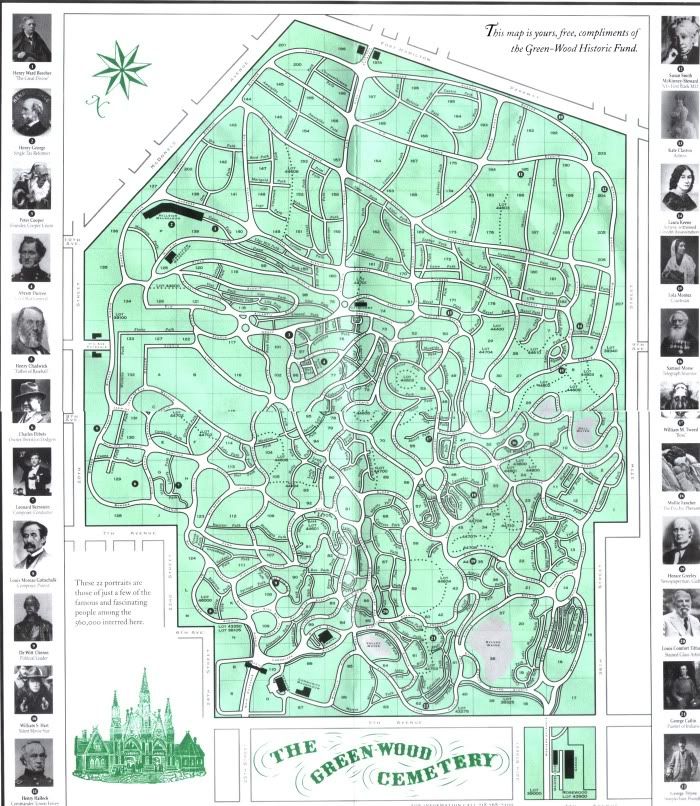
You are going to die. It could be in half an hour or it could be in eighty years, but it is going to happen. When that day comes, the question of where to be laid to rest will arise. The various ways that a person is remembered becomes much more complicated in a large city like New York, where, according to the 2008 report, about 148 people die every single day. Open space in this city is dwindling, even the largest cemetary is beginning to run out of burial plots.
 Image Titled "Greenwood" from Davidbellel
"Green-wood is running out of space," said Steve Estroff, the Manager of Education for the cemetery, " if a person has family [in the cemetery] they can be interred with their family." The lack of space means that more people are getting cremated,he explained. The cemetery, founded in 1838, is nearly as large as nearby Prospect Park and currently has about 600,000 graves, which may or may not include the two buried dogs that Mr. Estorff told me about.
The space problem facing Green-Wood automatically turns into a business problem. " As they run out of burial space, they lose their business," he said, " they lose their revenue". Although Green-Wood could soon stop functioning as an active cemetery, the future seems promising.
"Green-Wood also looks in the mirror and realizes they are an amazing outside historical museum," Mr. Estroff's said as his voice perked up at the conversation of the graveyard's historical value. His job is to give walking tours of the cemetery, teaching kids all of the facts he knows about the notable people buried there.He shared some of the stories with me, noting, "the monuments often revel things that are unexpected."
He explained that the cemetery will function as a cultural institution, sharing its beautiful landscape and history with the public. Those 600,000 bodies each have a story and the trees that have been around for more than a century have a story; these stories will continue on after the graveyard becomes inactive. Steve Estroff seemed very excited at the likely future for the cemetery, saying, "when you walk into Green-Wood you feel like you're walking through history."

Second Avenue Subway Work to Blame for UES Rat Problem?

Residents of the Upper East Side are starting to feel a little crowded thanks to the infestation of rats, which many believe is being caused by the construction of the Second Avenue Subway. Residents complained to the MTA but the project’s contractor, S3 Tunnel Constructors, determined that an abandoned building on Second Avenue, not the construction, was to blame.
According to the Wall Street Journal the contractor told the MTA that the blasting “may be exacerbating a pre-existing condition” and suggested that the abandoned building be cleaned, baited, and sealed.
Excavation of an underground cavern between 91st and 95th Streets in preparation for a tunnel-boring machine seems to be a major concern at the moment, though the MTA claims that the current work zone has no rodent problems and their spokesman, Jeremy Soffin pointed out that a rodent-control program that includes bait and traps within the construction zone is in place.
It is hard to say what exact cause of the rodent infestation is, but LeRoy Washington, who has lived in the Upper East Side since 1970 notes that while there have always been some rats in the area, “But it’s never been like this.”
The Second Avenue Subway project consists of a two-track line running from 125th Street to the Financial District along Second Avenue and is meant as a relief for the overcrowded Lexington Avenue line. The first phase of construction began in 2007 and is expected to finish in 2016, though there is speculation that it may last until 2018.
This isn’t the first time the Second Avenue subway construction has been noted for creating a residential problem. In December of 2009, residents were having respiratory problems and were claiming that the dust from the construction site was to blame.
Bjm_jb commented on the story at abclocal.com saying, “What do you expect when the city is run by a rat? Welcome to Bloombergland!” Secondavenuesagas.com commenter Valerie pointed out that the abandoned building the MTA is blaming for the rodent problem “is only abandoned because it was condemned due to unstable foundation, coincidentally, at the same time the MTA was blasting right in front of it.”
Whatever the cause, 93rd Street Resident Tara Reddi seems to feel somewhat helpless in the situation, stating, “We are, until 2018, in a living hell.”
Gawk and Point
On April 18 not one of over two dozen people stopped to help a dying person laying on the ground fatally stabbed in the Jamaica section of Queens. Many walked briskly by, a few took time to gaze at the collapsed body, others pointed, one person snapped a photo, and another shook the man's body to find a pool of blood and left.
Firefighters found the body, while responding to another call, but no thanks to the pedestrians. No one bothered to call 911.
Firefighters found the body, while responding to another call, but no thanks to the pedestrians. No one bothered to call 911.
A surveillance camera captured the blatant indifference to the body of Hugo Tale-Yax, 31, and the heroic actions moments before his death.
Tale-Yax was rescuing a woman from an attacker, which resulted in several stabs to the good samaritan's torso. Tale-Yax tried to run after his murderer, but feel face down on the sidewalk.
Tale-Yax's family and friends, and others across the city are astonished by the inaction.
"Any animal that is hurt on the street, the city or anybody walking by goes to rescue it. But in this case, he saved this woman's life, and where was the conscience of the people around him?" Rolando Tale-Yax, the victim's younger brother, told USA Today.
However, some are not surprised and even went so far as to remark on the general heartlessness of the city. On USA Today's online coverage, a commentator remarked, "all those New Yorkers that walked right past the guy and not a one tried to take his wallet?"
One notion that arises as to why people would ignore the Guatemala native is that he was homeless. Edwin Tacam, Tale-Yax's cousin, objected to that argument, stating, "He wasn't that kind of person who looked really homeless. I don't know why people ignored him."
While Tacam might be accurate on his cousin's appearance, it raises the question of the treatment of the homeless. Do actions of good samaritanism not extend to the homeless?
There are 39,000 homeless New Yorkers, an all time high for the city. The number of people in shelters have increased by seven percent. Coalition for the Homeless advocates and organizes against the mass homelessness in the city. They see the homeless as the "most vulnerable citizens" and try to debunk myths that stop others from caring and helping those in need. The coalition reports that they are able to help around 3,500 individuals rebuild their lives.
Nonetheless, they are going to have a harder time this year. Governor Paterson's budget proposal will cut $104 million for homeless services. With the historic amount of homeless New Yorkers the coalition is trying to find a best way to fight against such cuts, which includes having compassionate citizens writing a letter urging Paterson to avoid the cuts. Click here to participate.
Tale-Yax was rescuing a woman from an attacker, which resulted in several stabs to the good samaritan's torso. Tale-Yax tried to run after his murderer, but feel face down on the sidewalk.
Tale-Yax's family and friends, and others across the city are astonished by the inaction.
"Any animal that is hurt on the street, the city or anybody walking by goes to rescue it. But in this case, he saved this woman's life, and where was the conscience of the people around him?" Rolando Tale-Yax, the victim's younger brother, told USA Today.
However, some are not surprised and even went so far as to remark on the general heartlessness of the city. On USA Today's online coverage, a commentator remarked, "all those New Yorkers that walked right past the guy and not a one tried to take his wallet?"
One notion that arises as to why people would ignore the Guatemala native is that he was homeless. Edwin Tacam, Tale-Yax's cousin, objected to that argument, stating, "He wasn't that kind of person who looked really homeless. I don't know why people ignored him."
While Tacam might be accurate on his cousin's appearance, it raises the question of the treatment of the homeless. Do actions of good samaritanism not extend to the homeless?
There are 39,000 homeless New Yorkers, an all time high for the city. The number of people in shelters have increased by seven percent. Coalition for the Homeless advocates and organizes against the mass homelessness in the city. They see the homeless as the "most vulnerable citizens" and try to debunk myths that stop others from caring and helping those in need. The coalition reports that they are able to help around 3,500 individuals rebuild their lives.
Nonetheless, they are going to have a harder time this year. Governor Paterson's budget proposal will cut $104 million for homeless services. With the historic amount of homeless New Yorkers the coalition is trying to find a best way to fight against such cuts, which includes having compassionate citizens writing a letter urging Paterson to avoid the cuts. Click here to participate.
Monday, April 26, 2010
Legislation plan to make over Local Law 19.


While Earth Day has come and gone, law-makers in New York City are not letting go so quickly. On April 12, 2010, New York City’s Council speaker Christine Quinn, announced an expanded version of Local Law 19. Originally passed in 1989, Local Law 19 mandated the collection of recyclables from every residential building in the city. Within ten years of its initial enactment, the City of New York increased its residential recycling rate from less than one percent to more that twenty percent.
“We’re incredibly excited to be introducing a package of bills that will dramatically expand and overhaul the way we recycle here in New York City. Our legislation will divert over 8,000 tons of plastic every year away from landfills and incinerators. That’s equal to the amount of trash produced by nearly 10,000 people each year,” says Quinn.
The upgrade to the program would include expanded plastic recycling. The new legislation would require the Department of Sanitation to recycle all rigid plastic containers. The City expects this to divert more than 8,000 tons of plastic each year from landfills and incinerators. This would take place after the opening of a new recycling facility in Brooklyn, which is scheduled to open in 2012. In addition, of the 300 recycling bins already located in public spaces around the city, an extra 300 will be place over the next three years and a total of 700 bins within the next ten years.
The legislation would also mandate at least one department-sponsored household hazardous waste collection event in each borough every year. The legislation would also create a citywide textile collection program and a paint-recycling program. This would mean that retailers would take back unwanted household paint, which makes up about 50 percent of household hazardous waste.
In addition, the legislation would aim to change existing programs as well. It would require every school to designate a recycling coordinator and provide recycling receptacles in each classroom, also, they would extend the collection period from March 1st to November 30th.
“As chair of the Sanitation Committee, I wholeheartedly support these improvements to Local Law 19, the city’s comprehensive residential recycling law,” says James. “Revisions to the law that especially appeal to me include the expanded public space recycling initiative that would more than double the 300 bins in place, and require DOS to site a total of 700 public space recycling bins. I also support improved recycling at city and non-DOE Schools. This plan involves each school designating a recycling coordinator to place and manage receptacles around schools, specifically in classrooms and at entrances and exits of lunchrooms. The residential recycling law adds logical upgrades to the City’s current recycling efforts.”
Information taken from-
http://www.recyclingtoday.com/new-york-city-expanding-recycling-laws.aspx
Photo’s taken from
- http://www.inhabitat.com/
Middle-aged citizens band together to make roof Green - Kindergarteners grab crayons and markers in confusion

P.S. 41 a small grammar school in a quiet corner of Greenwich Village is taking center stage in a green idea that has floated around for over a decade. In six to eight weeks construction of the Greenroof Enviromental Literacy Labratory (GELL), atop P.S. 41's roof will begin. When complete it will serve as an rooftop garden classroom that will teach the schools K-5 students Biology chemistry, nutrition and aesthetics.
According to the school Principal Kelley Shannon the current backyard Garden is a valuable resource which teaches students lessons that are difficult to teach in a classroom. "But the Backyard is only so big" said Shannon. The schools problem will be solved through the GELL's 14,000 sq. foot urban garden. While the outlining fence and foundation of the garden is expected to be complete by the end of the year, students shouldn't look forward to frolicking in their new garden until a year from now in Spring 2011.
"We decided to do this as a first of it's kind prospect" said Chris Hayes Co-project Leader and Director of Communications and Development for the GELL project in a phone interview. "The idea is to get one done, so we can prove it can be done to the School Construction authority. This is a first for them." The School Construction Authority is a city organization that oversees major capital construction projects within the New York City public school system.
Hayes is a graduate of P.S. 41 and currently has children who attend as well. P.S. 41 is a coveted school in the city with actors, NYU Professors, artists, and lawyers clamoring to have their children attend. Due to this the school is constantly under threat of over crowding according to the administration. With PTA fundraiser auctions that often raise over $100,000 in a single night not only is it popular among the elite but subsequently well funded, adding to its desirability.
"The benefits will extend to the entire neighborhood" said Hayes in regard to the GELL "It cools off the city." The rooftop garden will work like a heat-sink dissipating the heat generated by the concrete, brick and steel structures below. It will also scrub the air of harmful pollutants like heavy metals, and excessive carbon monoxide. The city already has campaigns of white and black roofing in order to utilize the colors properties to reflect or absorb sunlight. Many cities however have looked to green roofs as a 21st century way or cutting down the pollutants generated by the ever growing metropolises while cutting down on urban heat island effects. "One roof isn't going to make a difference but its a start" said Hayes.
"Bloomturd" is at it again!
At least thats what they call him in the comments of this post (gotta love Gothamist commenters). Bloomberg wants to turn Union Square into a pedetrian plaza, similar to that of Times Square.
also THIS is super interesting!!! its photos taken of peoples responses (them crying!) from staring at Marina Abamovic for too long!
also THIS is super interesting!!! its photos taken of peoples responses (them crying!) from staring at Marina Abamovic for too long!
Subscribe to:
Posts (Atom)

 Posts
Posts